

As May draws to a close, I thought we should cover ALS Awareness Month.
What is ALS?
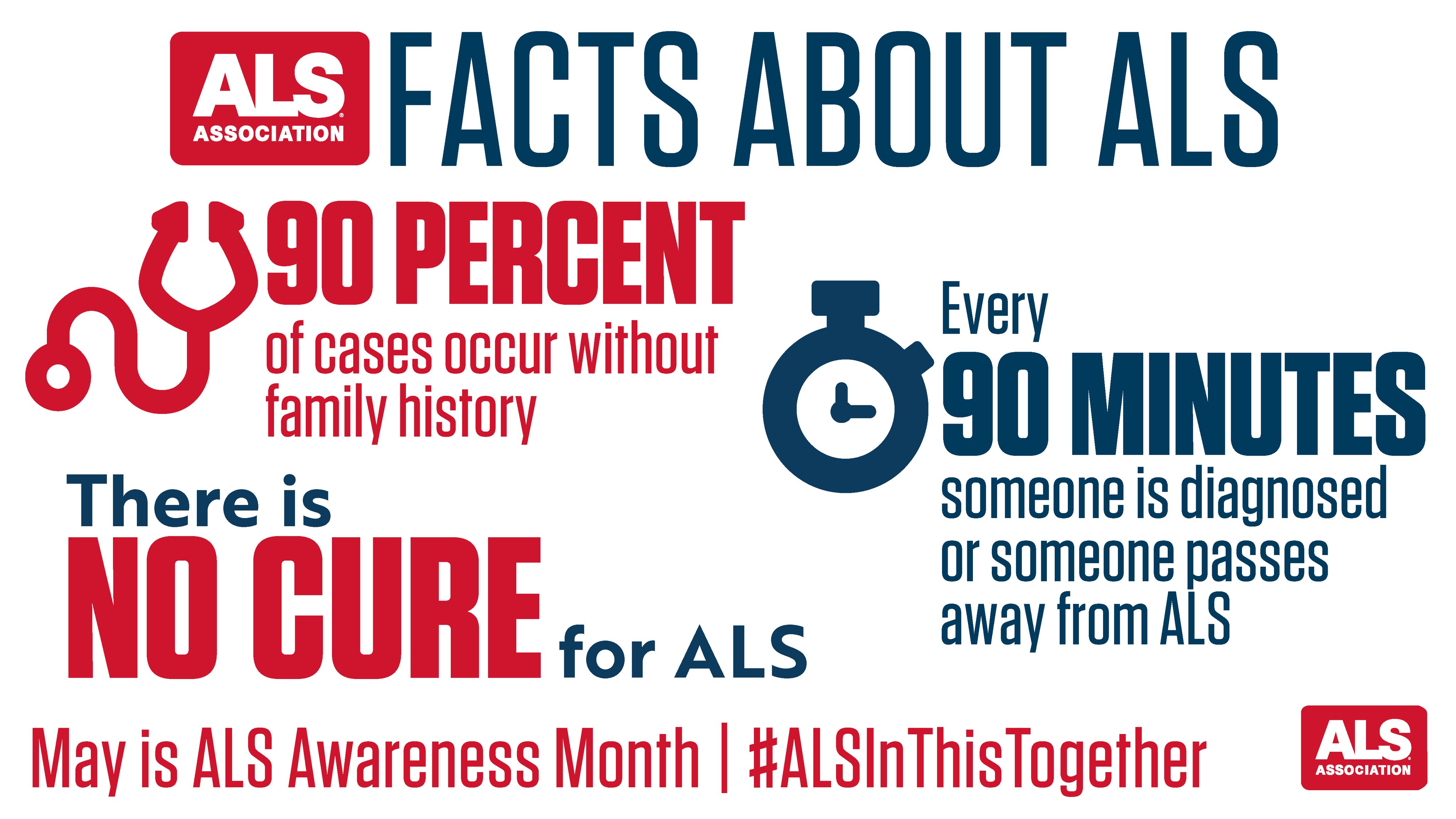
Amyotrophic lateral sclerosis (ALS), or Lou Gehrig’s Disease, is a progressive neurodegenerative disease that affects nerve cells in the brain and the spinal cord. This terminal disease attacks and kills the motor neurons in the brain which causes the brain to lose the ability to control muscle movement, slowly paralyzing the person as the disease progresses.

What are the symptoms of ALS?
Initial symptoms can vary depending on the person, as well as the disease’s progression rate. The most common initial symptom is the gradual, yet typically painless, progressive muscle weakness. This is often seen in the muscles that control speech and swallowing, and the muscles in hands, arms, legs and feet. Although the sequence and progression rates vary person-to-person, everyone diagnosed with ALS will experience muscle weakness and paralysis. Patients will eventually need permanent ventilation when the breathing muscles are affected.
Other symptoms include:
- Dropping things
- Stumbling and tripping
- Abnormal fatigue in extremities
- Slurred speech
- Muscle twitches and cramps
Incidentally, since ALS only attacks motor neurons, a person’s senses are not affected; the muscles for eyes and bladders are not usually affected as well.
How is ALS diagnosed?
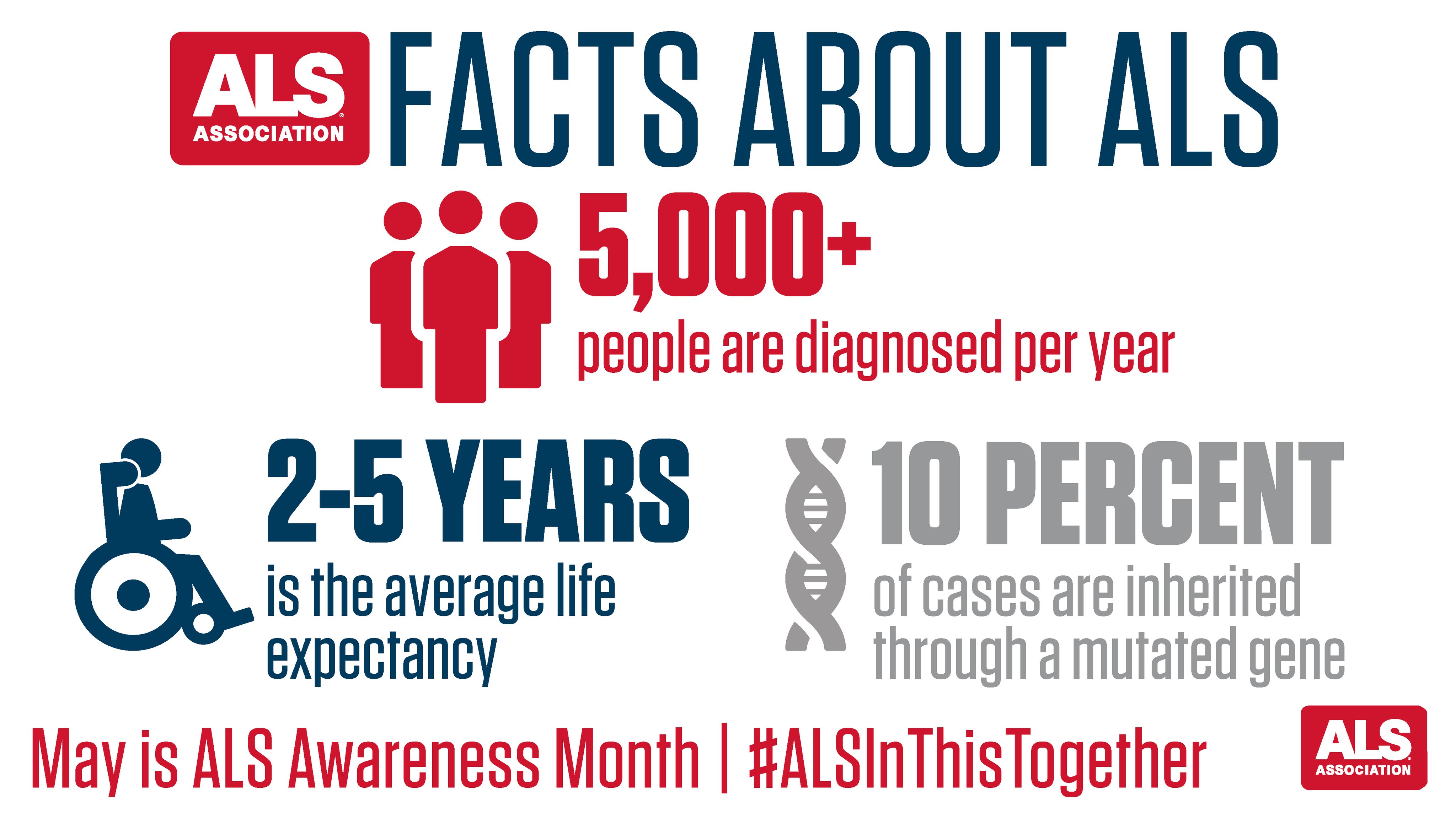
While the average length of survival is reported as 3 to 5 years, many patients have lived anywhere from 5 to 10 or more years. Probably the most famous case was with Stephen Hawking who managed to live to his 70’s which was around 55-years after his initial diagnosis!
It is incredibly difficult to diagnose ALS as there is no one test or procedure to determine the disease. Doctors will go through a comprehensive diagnostic workup of different clinical examinations and diagnostic tests to rule out other diseases that mimic ALS. These procedures can include:
- Electrodiagnostic tests including electomyography (EMG) and nerve conduction velocity (NCV)
- Blood and urine studies including high resolution serum protein electrophoresis, thyroid and parathyroid hormone levels and 24-hour urine collection for heavy metals
- Spinal tap
- X-rays, including magnetic resonance imaging (MRI)
- Myelogram of cervical spine
- Muscle and/or nerve biopsy
- A thorough neurological examination
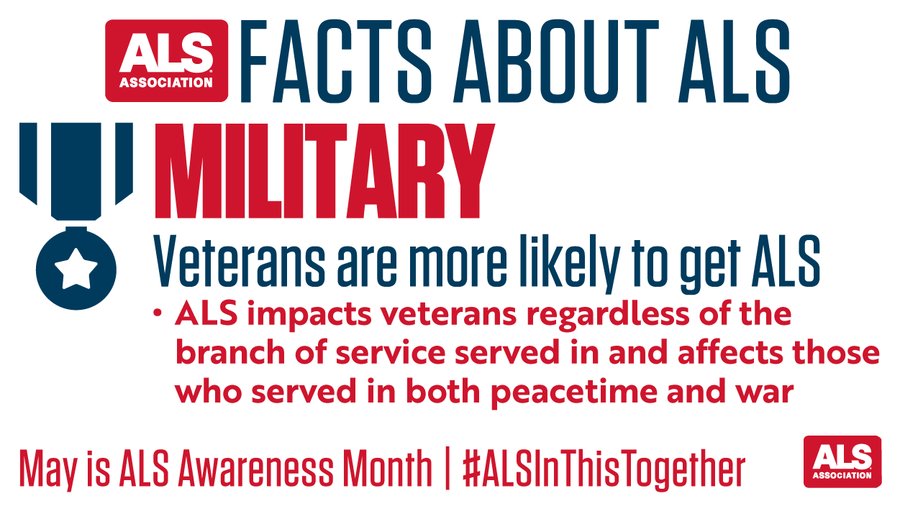
ALS is simply a terrible disease to watch someone you love suffer from, and there is still so much that is not known about it. That’s why it is important to raise awareness and support the fight to end ALS. Many people remember the ALS Ice Bucket Challenge that happened several years ago now. The money raised during that have helped researchers immensely, though there is still no real treatment for those afflicted. And now, we are seeing more and more people being diagnosed with ALS, especially those who served in the military.
How you can help!
There are many ways to help support the fight to find a cure and raise awareness for ALS! The ALS Association has Chapters in every state that host various fundraisers and awareness walks, you can find links to more information at: ALSA.org/fight-als.
You can support my Northeastern Wisconsin Walk to Defeat ALS team at: ALSAWI.org/team/ALSAvengers2020.




 Kendra Cornell
Leave a comment